
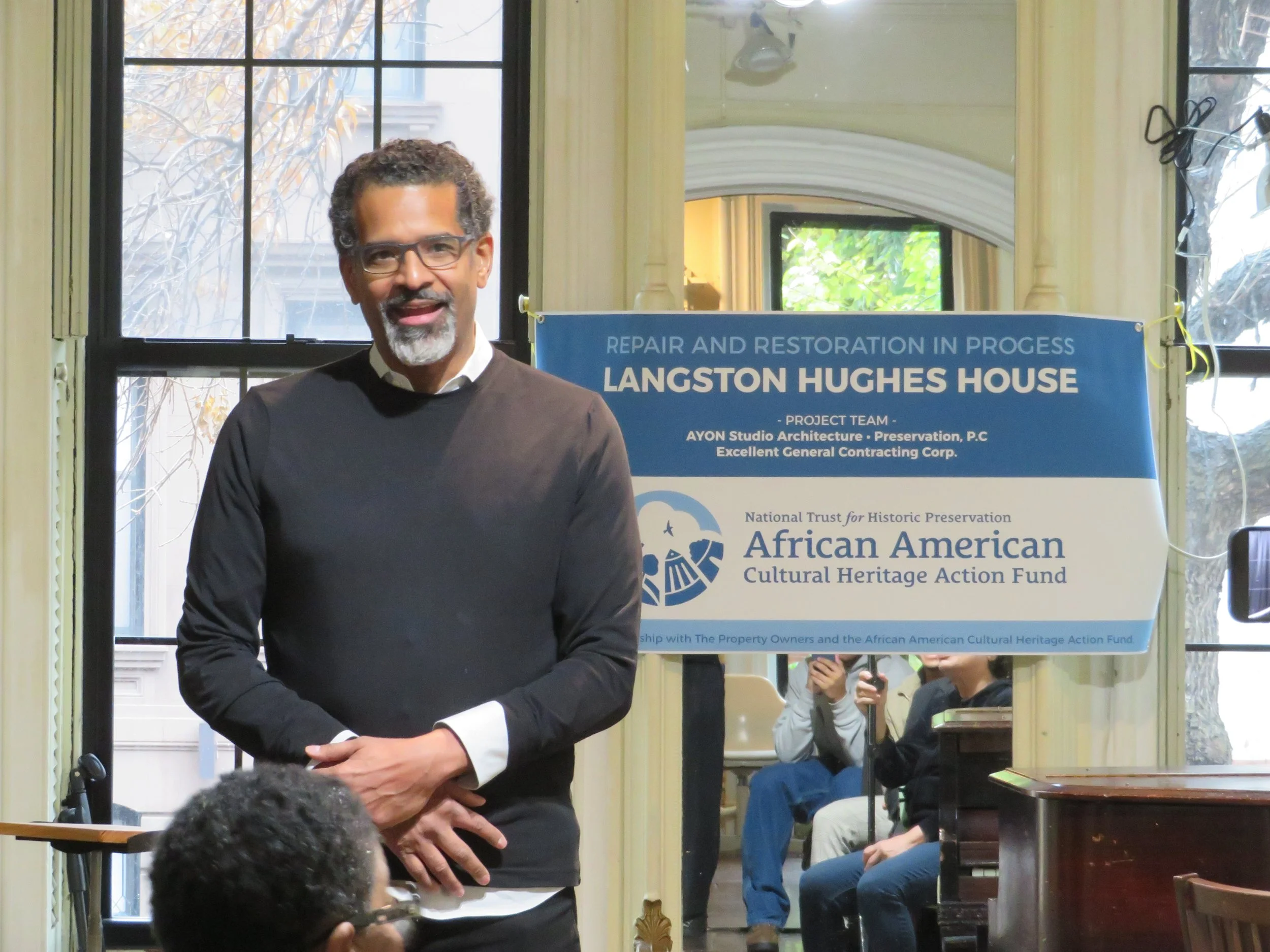
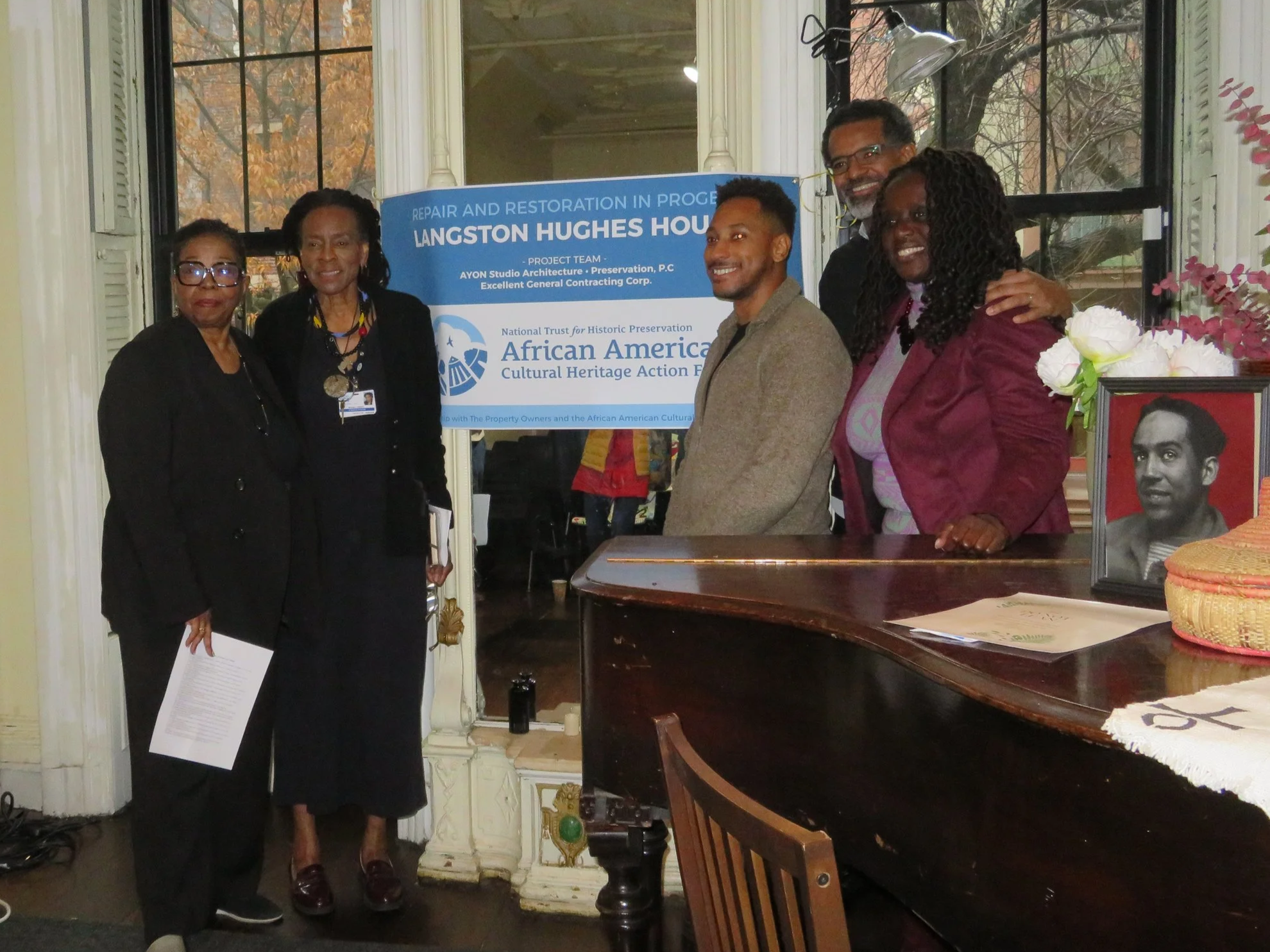
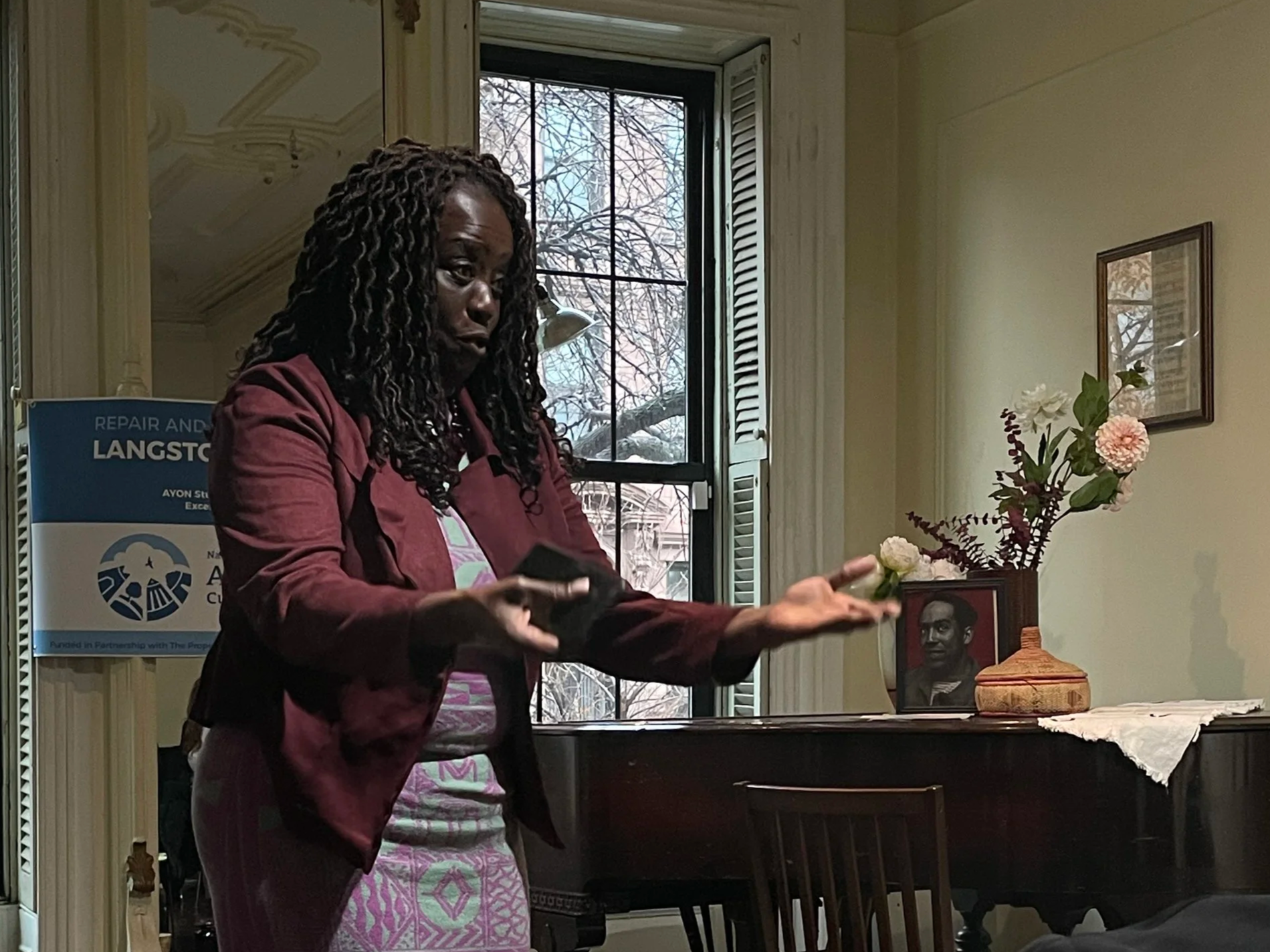
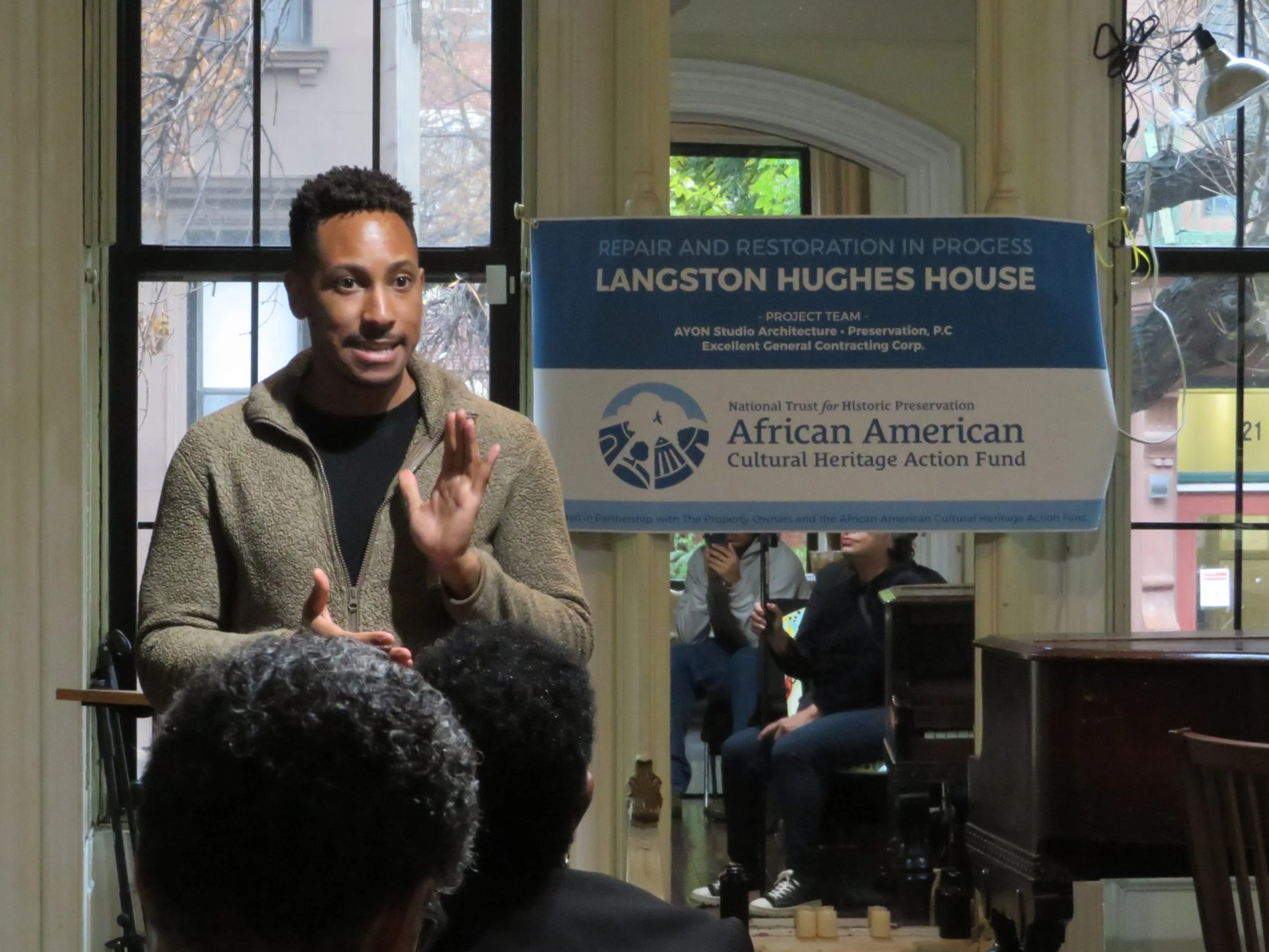
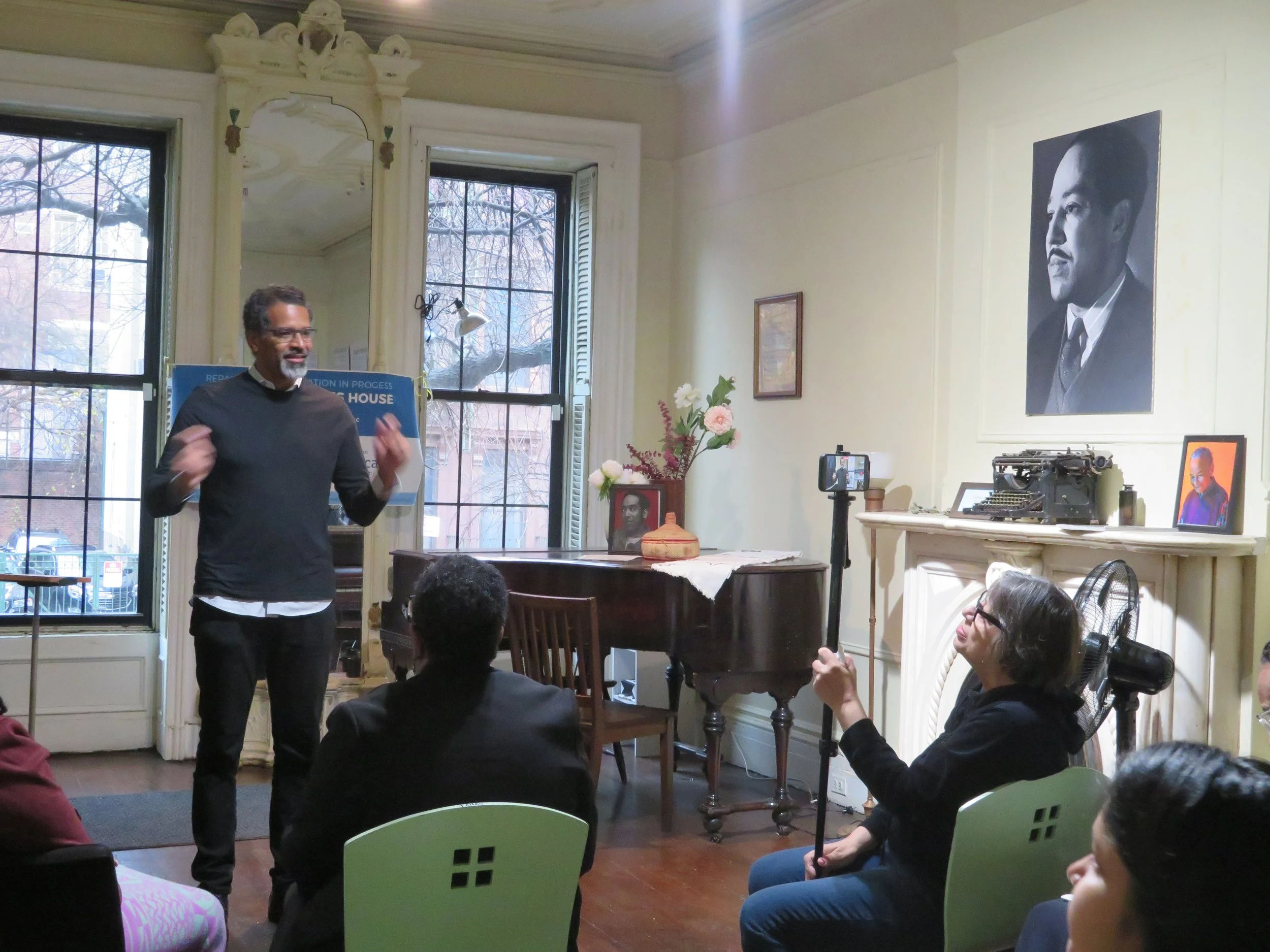
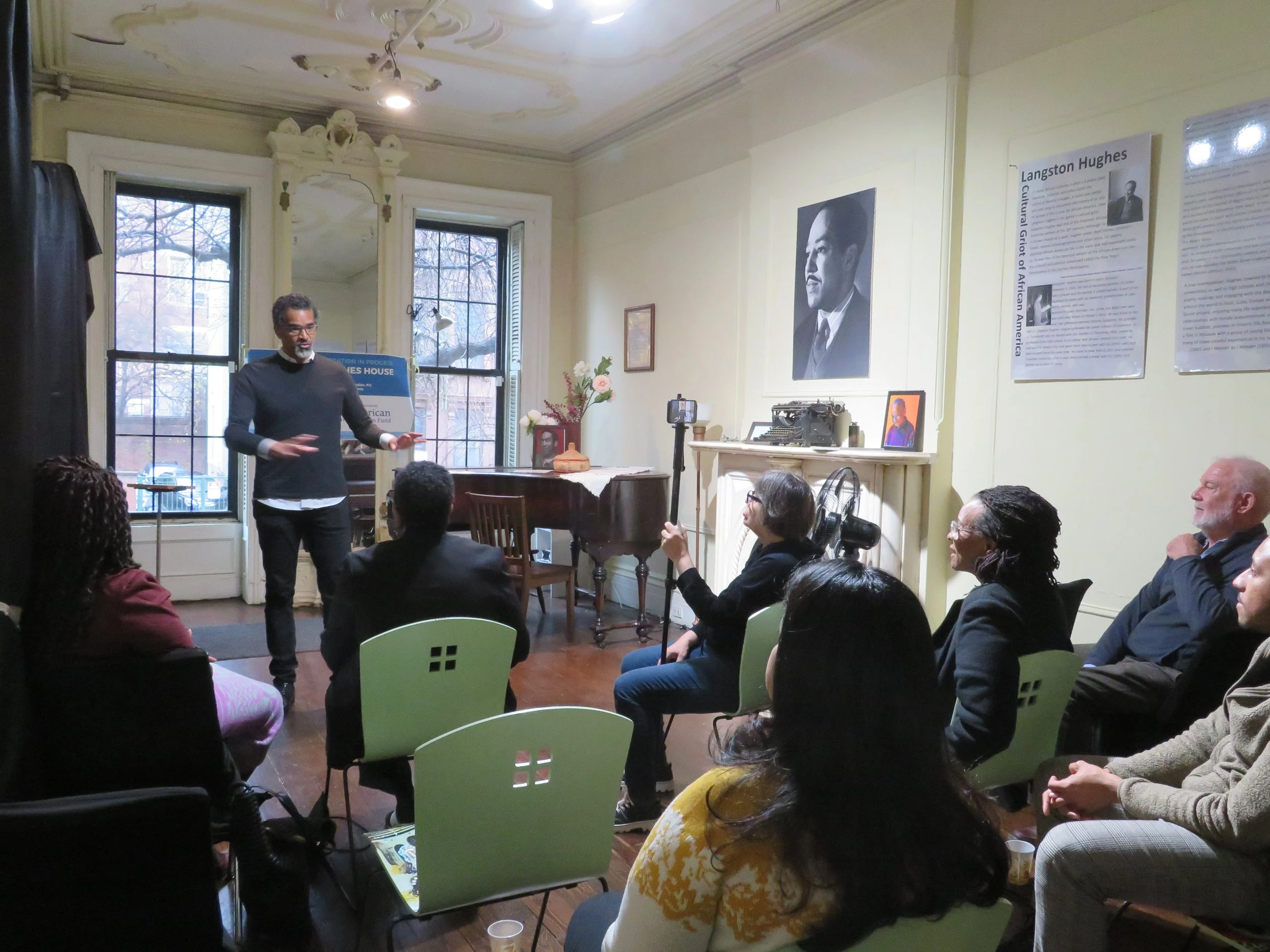
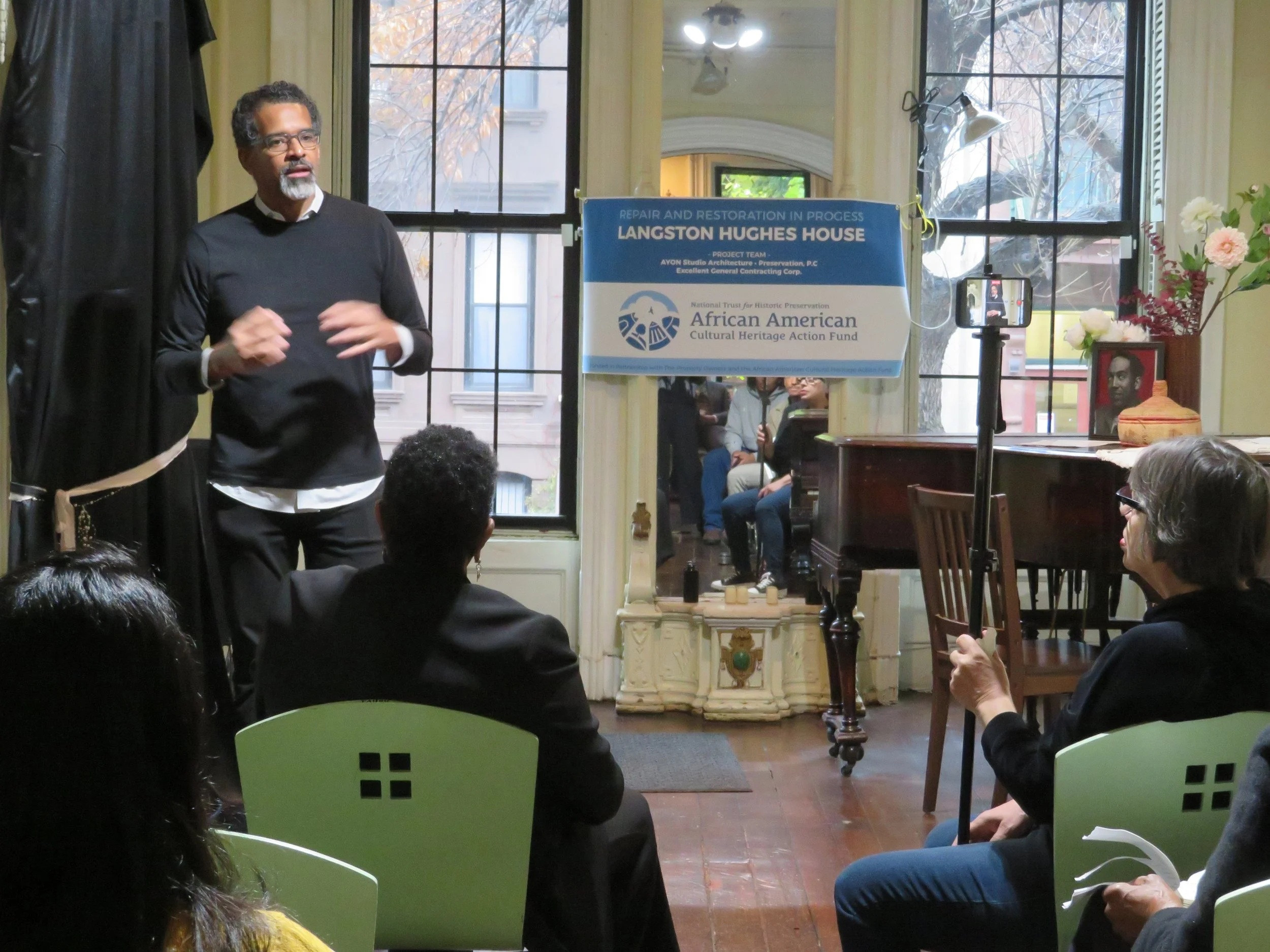
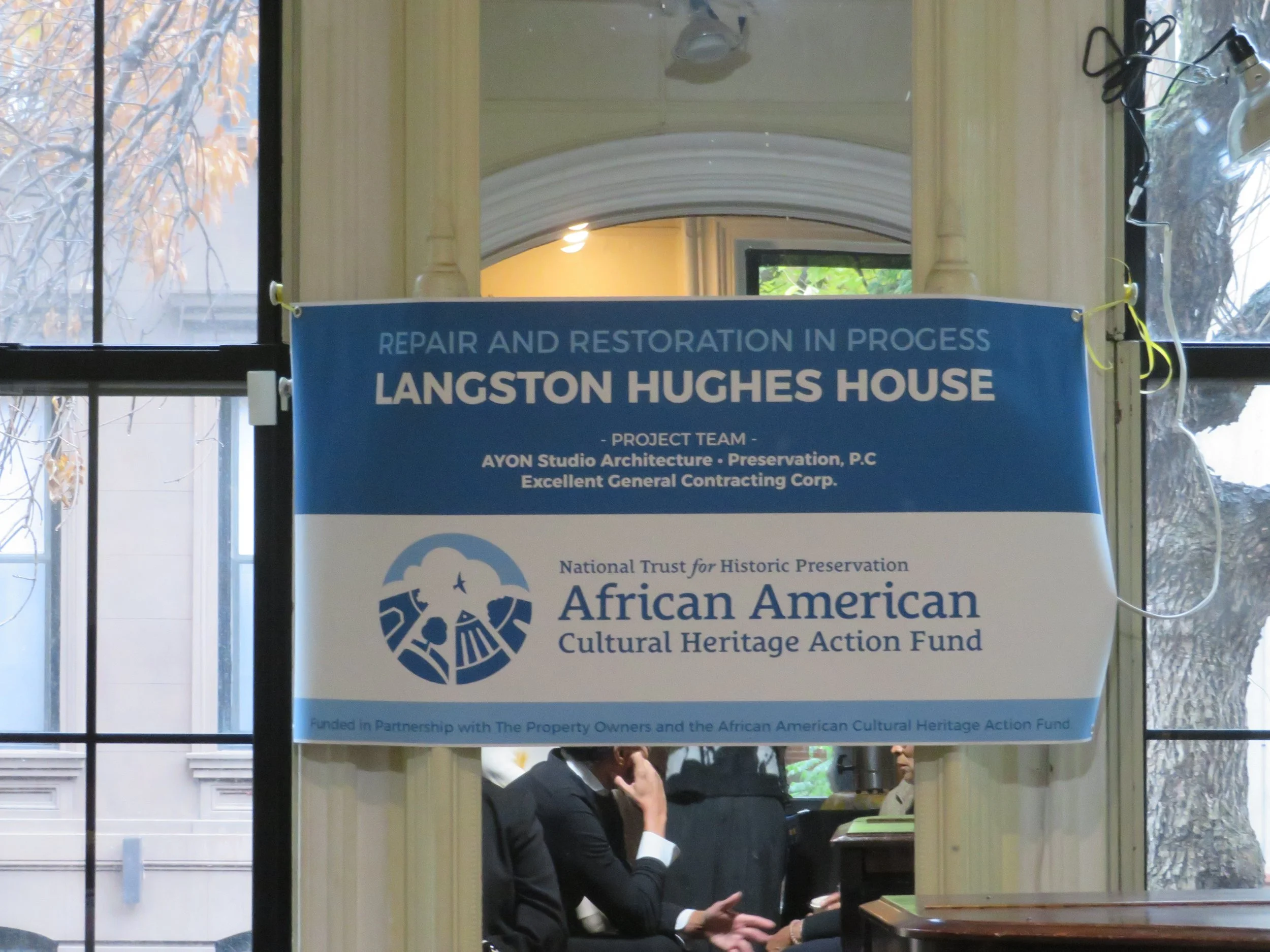
Construction is now underway at the historic Langston Hughes House at 20 East 127th Street. AYON Studio is honored to be the architect for this significant Landmark restoration project, made possible through the National Trust for Historic Preservation’s African American Cultural Heritage Action Fund. Principal Angel Ayón spoke at the recent in-person event marking the start of construction, sharing its important historic relevance, as well as the Studio’s pride in being entrusted with the building’s restoration design.
A prolific African American author, and the first to support himself through his writing, Langston Hughes earned critical attention for his realistic portrayal of Black characters and advocacy on issues concerning Black culture. He was later heralded as one of the foremost figures of the Harlem Renaissance.
Hughes bought the home in Harlem in December 1947, with money he earned from Street Scene, a Broadway opera for which he wrote the lyrics, and shared it with his long-time family friends, Ethel (Toy) and Emerson Harper. He moved in the following summer, and stayed there for the remainder of his life, making a significant impact on the neighborhood and its children, who remembered the man at No. 20 fondly after his passing in May 1967.
Part of his community legacy included the transformation of a barren patch of land in front of the house, which he dubbed Our Block’s Children Garden, cultivated with plants from Amy Spingarn’s Dutchess County estate. He let every child pick a flower to plant and nurture and posted their name on a picket beside each plant. In 1954, The New York Times ran a photo of the garden in the “Around Town” column.
The row house itself, built in 1869 as part of the post-Civil War building boom, was designated a NYC Landmark in 1981 and was listed on the National Register of Historic Places the following year. Designed in the Italianate style by architect Alexander Wilson, the three-story plus basement brownstone building features a stoop with cast-iron railings, double-hung windows, and a modillioned sheet metal roof cornice. The house, while physically understated, remains a vital part of Harlem's cultural fabric and a tribute to the enduring power of Hughes's voice, well into the 21st century.